Nº 0183 · Imperial villa and garden
Katsura Imperial Villa
A prince’s villa that modernists read as modern.
Why it matters
Its plain timber buildings and stroll garden, made for a princely family, became a reference for modern architects after Bruno Taut visited in May 1933. Kenzo Tange and Walter Gropius wrote about it in their 1960 book, with photographs by Yasuhiro Ishimoto.
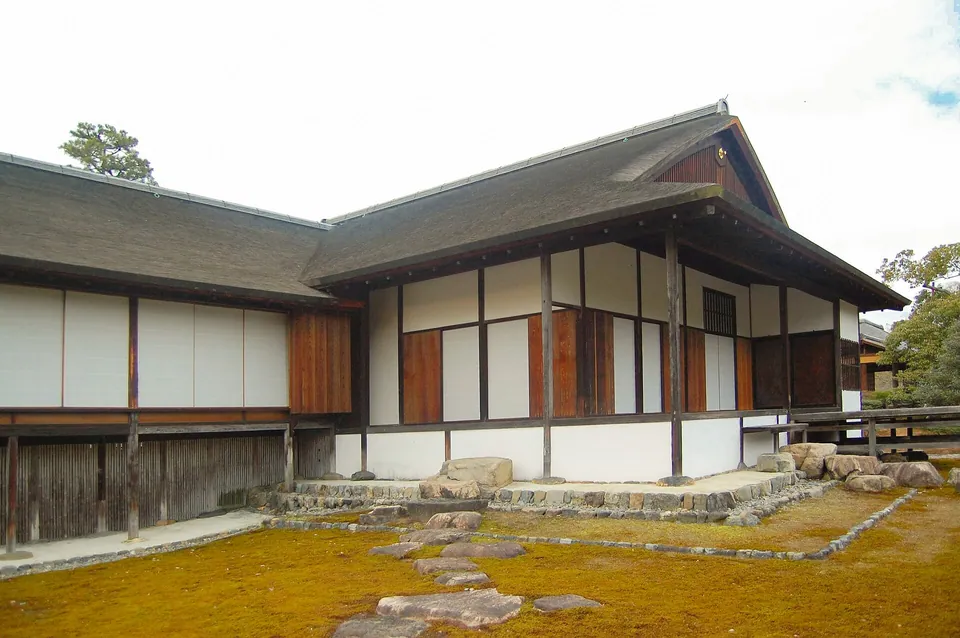
Prince Hachijo Toshihito began the villa on the west bank of the Katsura River in the early 17th century, and by 1624 hills had been formed and a pond dug. His son Toshitada enlarged it in the mid 17th century, and three main buildings now stand in a row: the Old Shoin, the Middle Shoin and the New Palace. Around the pond are teahouses, formal lines of stepping stones, a boat landing and small versions of famous places such as Amanohashidate. The design is often credited to Kobori Enshu, but that attribution rests on a later poem and is disputed.
What to notice
- Stepping stonesA line of stepping stones crosses the moss to the house.
- The raised floorThe floor stands raised on posts, with slatted screens below.
- Screens onto the pondIn the Shokintei teahouse the shoji slide back onto the pond garden.
3 min read
The full story
A moon over Katsura
Prince Toshihito was born in 1579, the sixth son of an imperial prince. At seven he was adopted by the warlord Toyotomi Hideyoshi, and he was released three years later, in 1589, when Hideyoshi had a son of his own. He was given land worth 3,000 koku of rice a year and founded a new princely house, the Hachijo.
In this story
- A moon over Katsura
- Three houses in a row
- Boats, tea and visitors
- Cropped to a grid

The story continues in the app
- Built by
- Prince Toshihito, then Prince Toshitada
- Materials
- Timber frame, tatami, shoji and fusuma
- Garden
- Stroll garden: pond, islands, teahouses, stepping stones
- Managed by
- Imperial Household Agency, since 1883
- Status
- Real · guided tours by reservation
Connections
- Prince Hachijo Toshihito
- Prince Hachijo Toshitada
- Imperial Household Agency
- Early modern period
- Architecture
- Wood
- Kyoto
Nearby in the archive
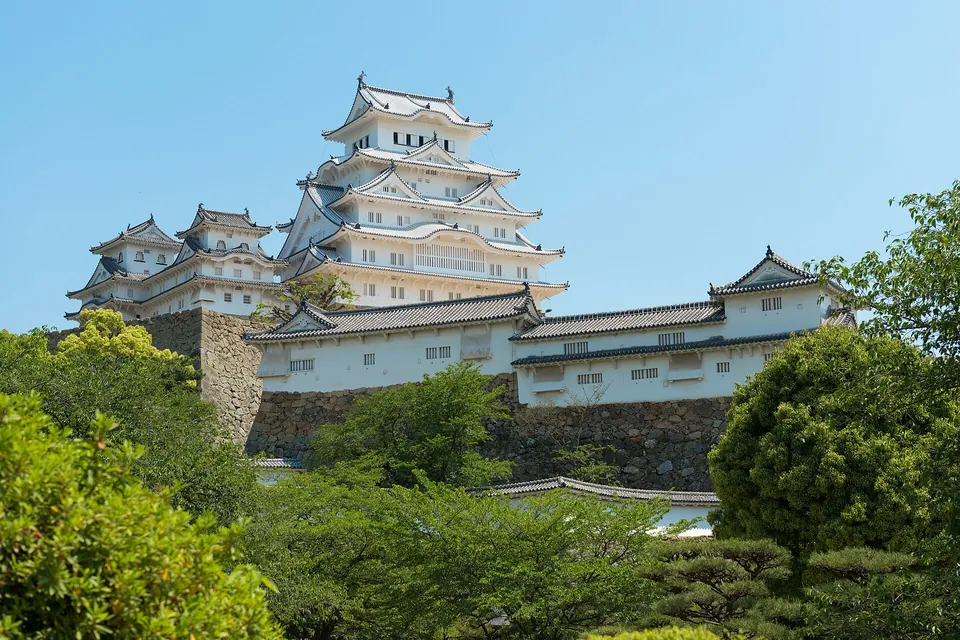 Himeji CastleIkeda Terumasa · 1609 · built in the same decades, as a fortress
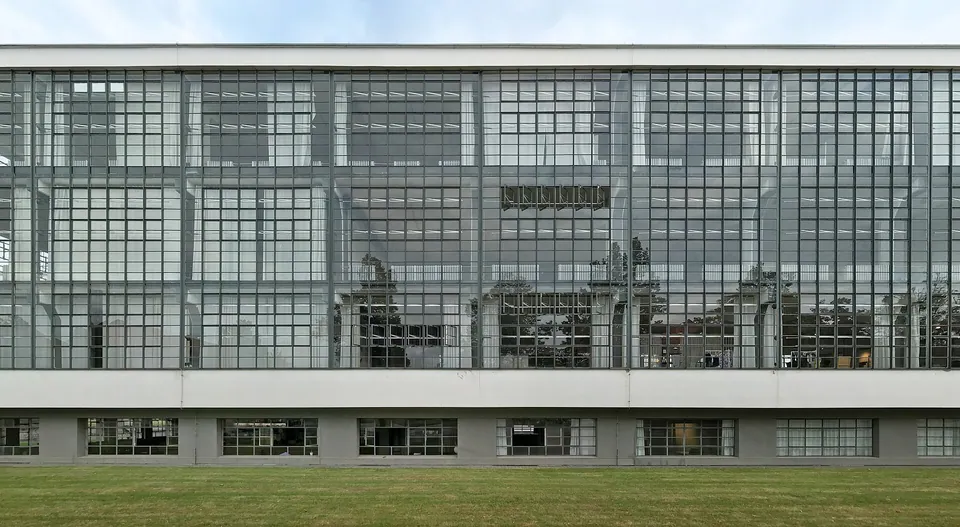 Bauhaus Building, DessauWalter Gropius · 1926 · Gropius later wrote about Katsura
In collections
Go further
- Katsura: Tradition and Creation in Japanese Architecture, Yasuhiro Ishimoto, Kenzo Tange and Walter Gropius (1960)The book of Ishimoto’s photographs of 1953 and 1954 that set the modernist reading of the villa, with Tange’s essay and Gropius’s introduction.
- Katsura: Imperial Villa, Arata Isozaki (2005)A 400-page illustrated volume on the villa, published by Phaidon.
- Katsura Imperial Villa, Imperial Household AgencyThe official site, with an interactive map of the buildings and garden, a gallery and the rules for booking a tour.
- Garden at Katsura Detached Palace, Nara National Research Institute for Cultural PropertiesA short scholarly entry on the garden from the institute’s Japanese garden dictionary.
- Ishimoto Yasuhiro Photo Center, The Museum of Art, KochiThe archive that holds Ishimoto’s prints and negatives, including the Katsura series.
Sources
- The Garden at Katsura Detached Palace, Nara National Research Institute for Cultural Properties
- Japanese Gardens: Katsura, Bowdoin College
- Katsura Imperial Villa, Imperial Household Agency
- Katsura Imperial Villa, Japan National Tourism Organization
- Wikipedia (English), Wikimedia Foundation