Nº 0080 · Residential and office tower
Nakagin Capsule Tower
140 capsules built to be replaced, never replaced.
Why it matters
Its capsules were meant to be swapped every 25 to 35 years, and none ever was. MoMA calls it one of the few realisations of Metabolism, a movement of buildings meant to adapt over time.
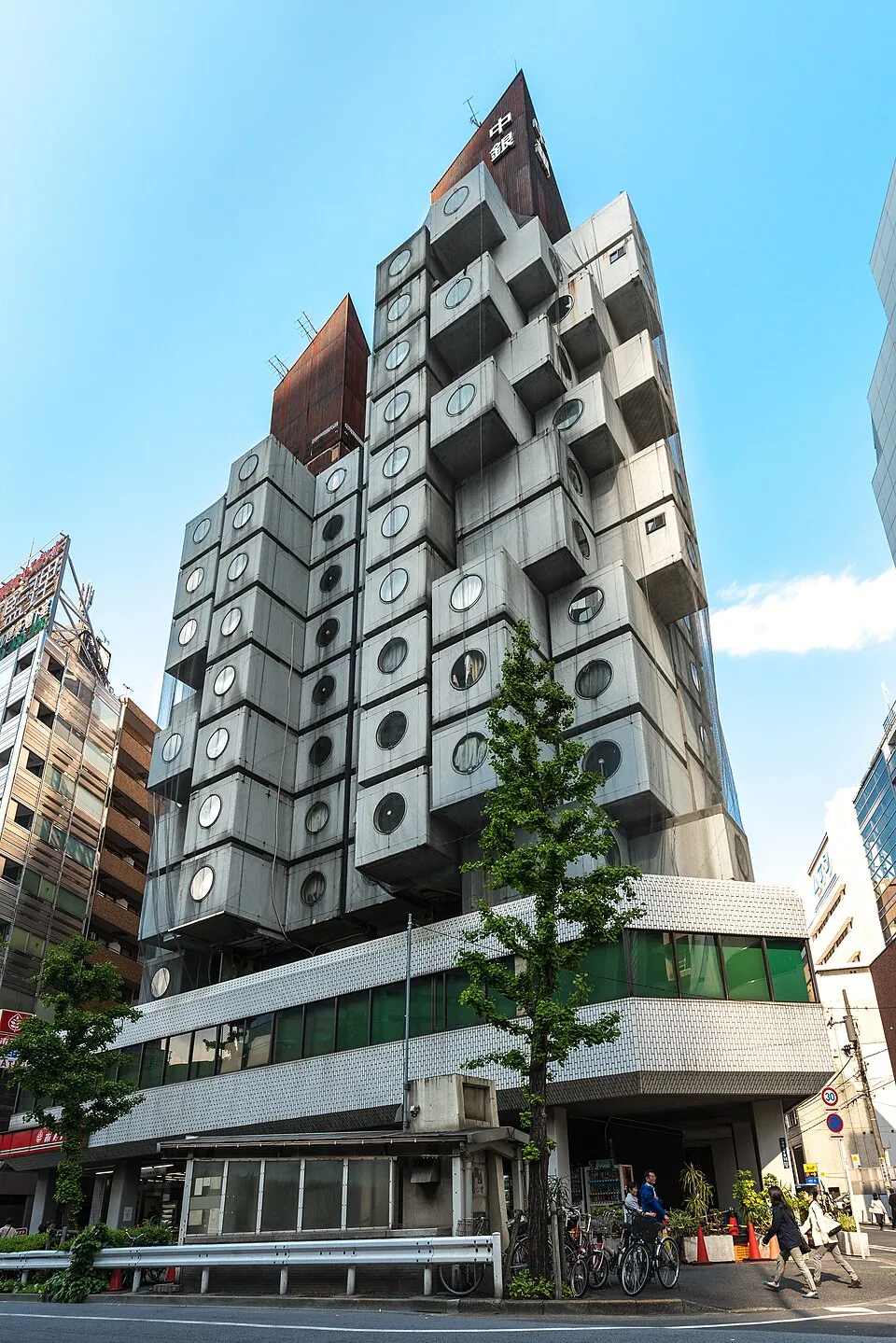
Kisho Kurokawa designed the tower in Ginza, Tokyo, completed in 1972: two interconnected cores with 140 prefabricated capsules bolted to them. Each capsule, about 2.5 × 2.5 × 4 m, came with fitted furniture, a round window and a Sony colour television, and was marketed as a small home for commuting businessmen. Over five decades the capsules served as second homes, offices, student rooms and tea rooms. The tower was demolished in 2022, and restored capsules are now at MoMA, SFMOMA and M+.
What to notice
- The windowsEvery capsule has a single round window.
- The coresThe tops of the two cores rise above the last capsules.
- Late yearsStains, rust and safety netting in 2017, five years before demolition.
3 min read
The full story
A pavilion made permanent
Metabolism was launched in 1960, when a group of Japanese architects, designers and critics, Kisho Kurokawa among them, published a manifesto at the World Design Conference in Tokyo. They borrowed the word from biology. Buildings and cities, they argued, should grow and renew their parts as living things do. Most of what they drew stayed on paper.
In this story
- A pavilion made permanent
- Four bolts per capsule
- Second homes and tea rooms
- Fourteen capsules restored

The story continues in the app
- Capsules
- 140, each about 2.5 × 2.5 × 4 m
- Window
- One round window per capsule, about 1.3 m across
- Built
- 1970 to 1972
- In collection
- MoMA (A1305) · SFMOMA (A1302) · M+ (A806)
- Status
- Demolished in 2022
Connections
Nearby in the archive
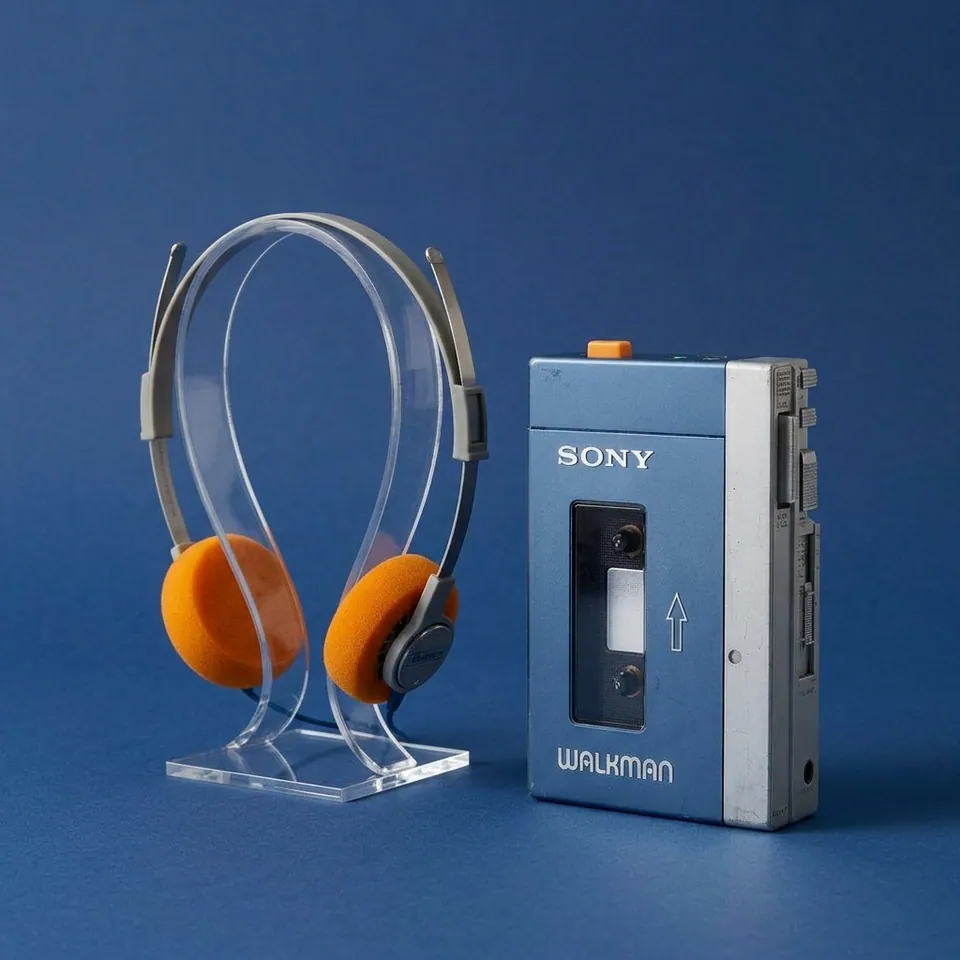 Walkman TPS-L2Sony · 1979 · Sony also made each capsule’s colour TV
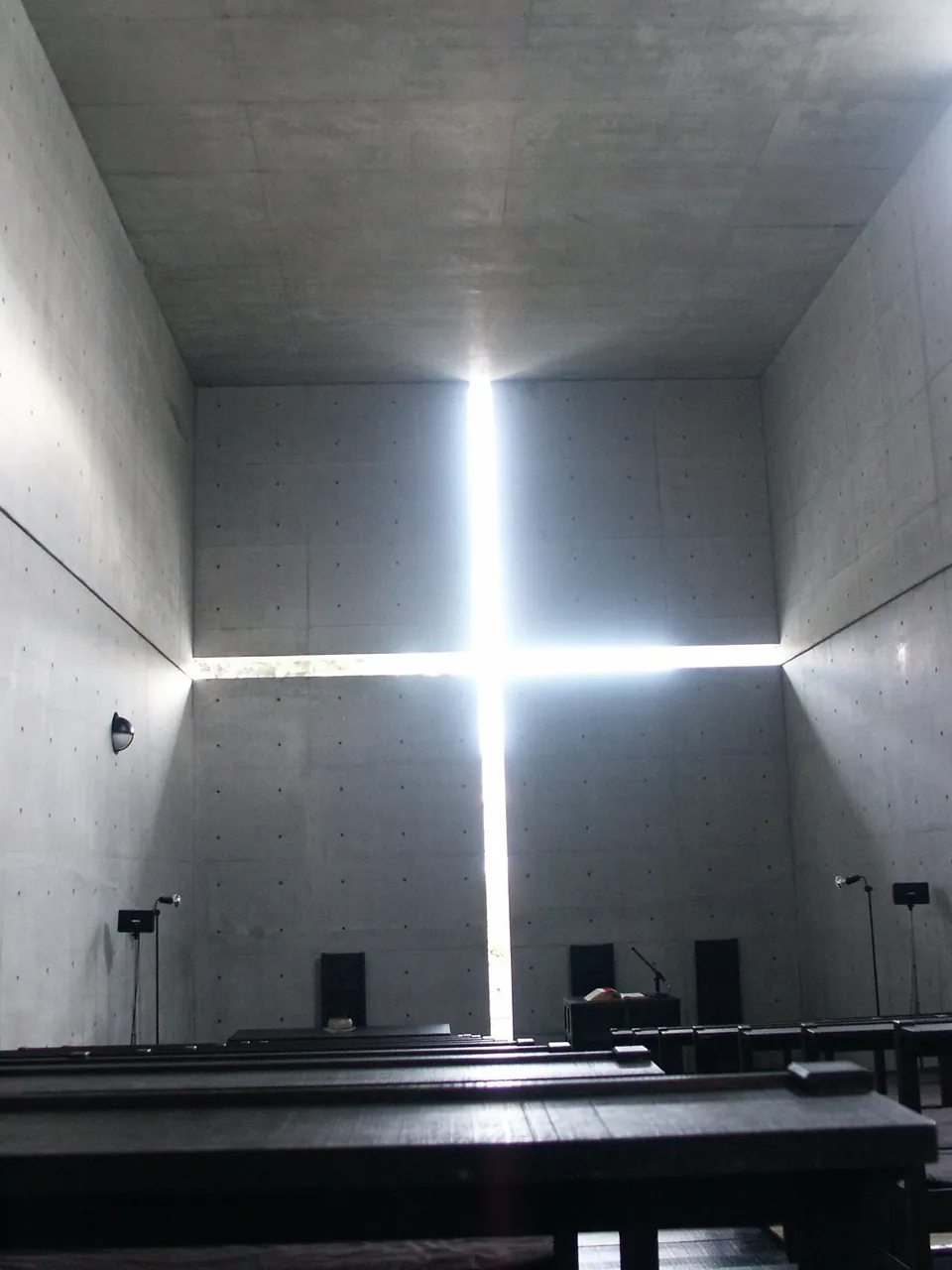 Church of the LightAndo · 1989 · another Japanese architect, in concrete
In collections
Go further
- Kisho Kurokawa: Nakagin Capsule Tower, Evangelos Kotsioris (2025)A 48-page volume in MoMA’s One on One series on the tower’s design, construction, changing uses and demolition, with testimonies from some of its last residents.
- 1972, Noritaka Minami (2015)A photographer’s book of the tower and its capsule interiors in their late years, with essays by Julian Rose and Ken-ichi Yoshida.
- A Towering Acquisition, Alexxa Gotthardt, SFMOMA (2024)The story of how Kurokawa’s own capsule was taken off the tower and came to San Francisco.
- Unit A806, Nakagin Capsule Tower (1970 to 1972), Tokyo, Japan, M+The museum record for a restored capsule, with photographs, measurements and materials.
- 中銀カプセルタワービル保存・再生プロジェクト, Nakagin Capsule Tower Preservation and Restoration ProjectThe preservation project’s own site, in Japanese, tracking where the 23 saved capsules have gone.
Sources
- The Many Lives of the Nakagin Capsule Tower (press release), The Museum of Modern Art
- Kurokawa Kisho, Nakagin Capsule A1302, 1972, San Francisco Museum of Modern Art
- Unit A806, Nakagin Capsule Tower (1970-1972), Tokyo, Japan, M+, Hong Kong
- A Towering Acquisition, San Francisco Museum of Modern Art
- Nakagin Capsule Tower (Icons at Risk), Iconic Houses