Nº 0182 · Soy sauce dispenser
Kikkoman soy sauce dispenser
A hundred prototypes to stop one drip.
Why it matters
Ekuan gave a cheap, mass-produced container the kind of patient refinement usually kept for craft, and M+ says the bottle replaced the larger kitchen containers on Japanese tables. MoMA and M+ both collect it, and its shape alone, without a logo, is now a registered trademark in Japan.
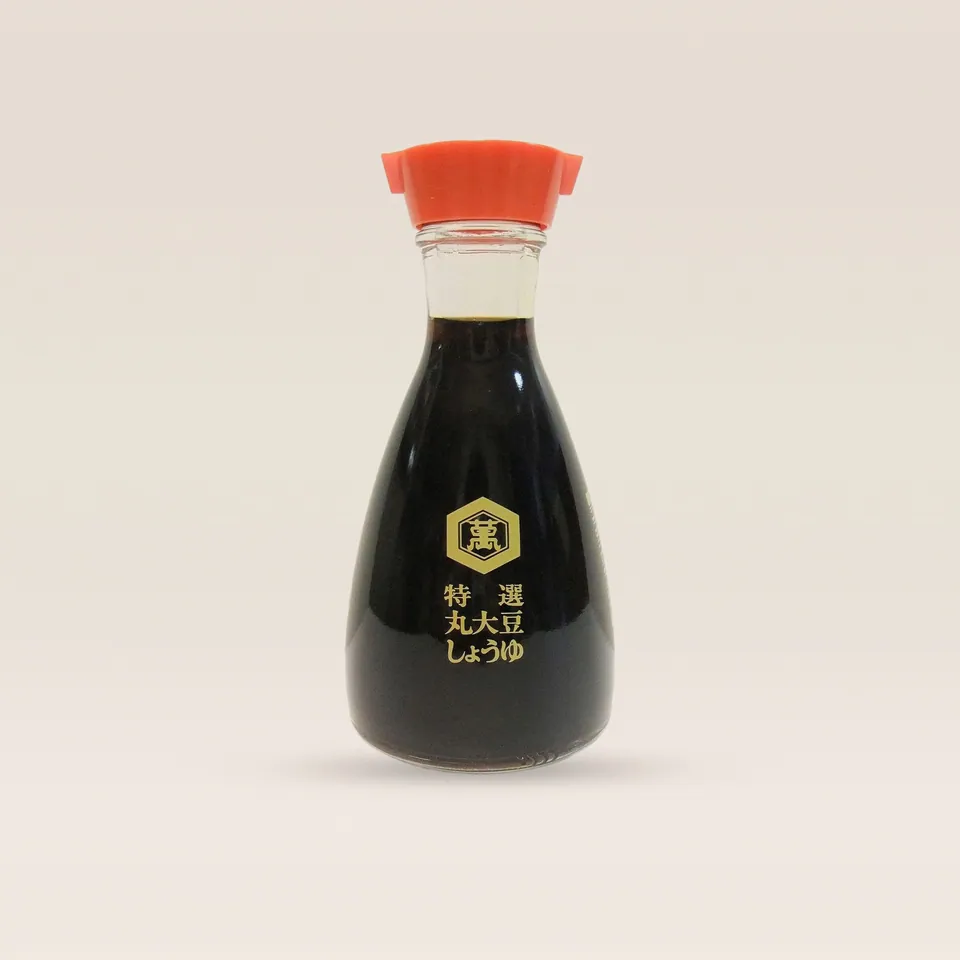
Kikkoman asked for a small bottle for the table after it began selling one-litre bottles for small households in 1955. Kenji Ekuan and GK Design Group spent about three years and nearly one hundred prototypes on it, most of the work going into a spout that pours and then stops without a drip, and the bottle went on sale in 1961. The body is clear glass, so the level of the dark sauce shows, under a red polystyrene cap. Kikkoman reports more than 500 million bottles shipped by March 2018, the month the shape was registered as a three-dimensional trademark in Japan.
What to notice
- The red cap and glass rimThe red polystyrene cap sits on a thick glass rim at the top of the neck.
- The clear neckClear glass at the neck shows how much sauce is left.
- The wide baseThe body widens from the neck to a broad base, a shape M+ likens to sake vessels.
3 min read
The full story
A bottle for the table
Soy sauce in post-war Japan came in large bottles. MoMA’s label for the dispenser describes the standard 1.8-litre size as both unwieldy and unsightly. In October 1955 Kikkoman, the brewer based at Noda in Chiba Prefecture, brought out a one-litre bottle for smaller households, and then wanted something smaller still, a bottle that could be carried to the table and left there. The company’s stated aim was a dispenser that would count as tableware, in the same category as a plate or a teacup.
In this story
- A bottle for the table
- A spout cut two ways
- From kitchen to table
- A shape without a label

The story continues in the app
- Materials
- Glass body, red polystyrene cap
- Dimensions
- About 13.5 cm high, 6.6 cm across (M+)
- Development
- About three years, nearly 100 prototypes
- In collection
- MoMA, New York · M+, Hong Kong
- Status
- Real · still in production
Connections
- Kenji Ekuan
- GK Design Group
- Kikkoman Corporation
- Space Age
- Industrial design
- Glass
- Plastic
- Noda, Chiba
- Tokyo
Nearby in the archive
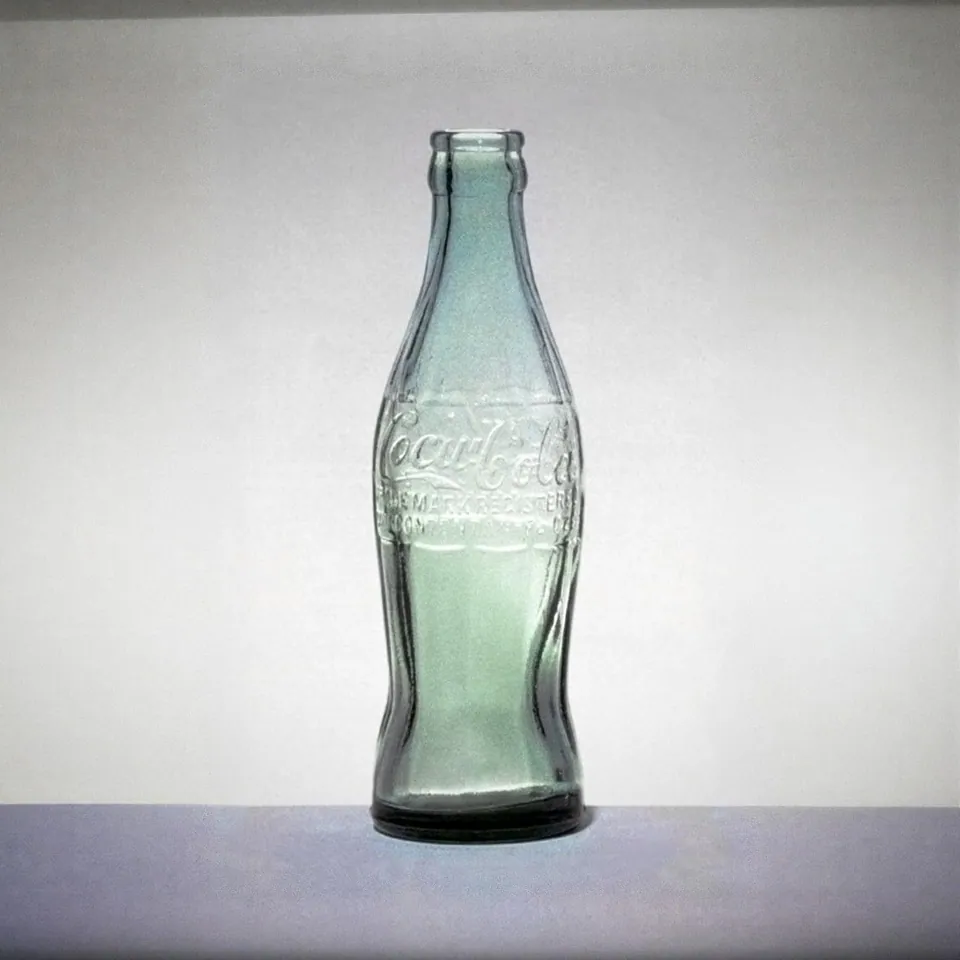 Coca-Cola contour bottleRoot Glass Company · 1915 · another bottle whose shape is a trademark
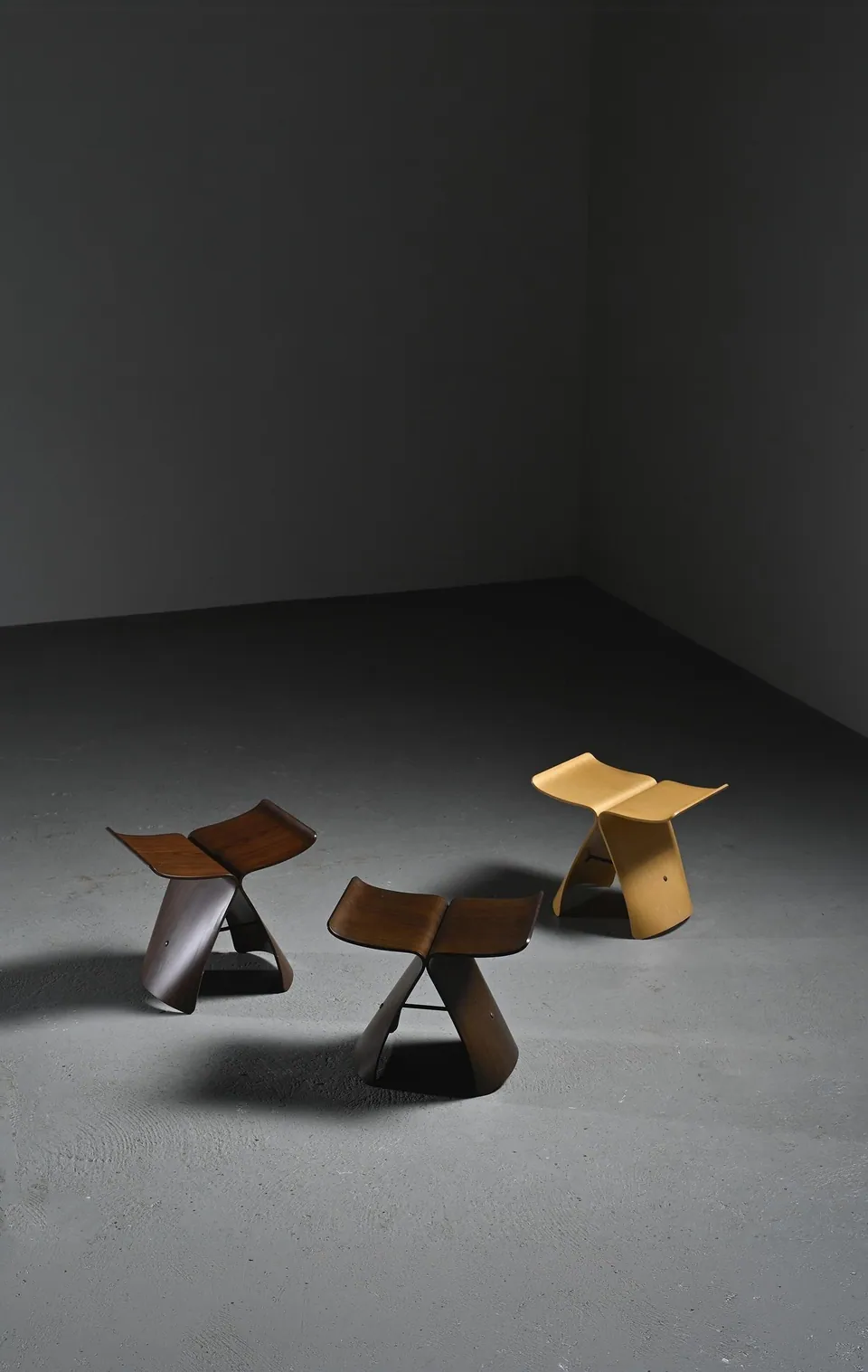 Butterfly StoolSori Yanagi · 1954 · Japanese industrial design of the same years
In collections
Go further
- The Aesthetics of the Japanese Lunchbox, Kenji Ekuan (1998)Ekuan’s own account of how he thought about everyday Japanese objects, argued through the lunchbox.
- Kikkoman soy sauce container, object 2016.637, M+, Hong KongThe museum record, with measurements, materials and a short account of the spout and the prototypes.
- Kenji Ekuan, GK Design Group. Soy Sauce Dispenser. 1961, The Museum of Modern ArtMoMA’s record for the bottle, listing the three exhibitions in which the museum has shown it.
- Kikkoman Today, Vol. 34 No. 1, Kikkoman Corporation (2020)The maker’s own summary of the commission, the shipment figures and the 2018 trademark registration.
- From Soy Sauce To Bullet Trains: Famed Japanese Designer Dies At 85, Bill Chappell, NPR (2015)An obituary that places the bottle within Ekuan’s career and quotes him on why he made things.
Sources
- Kikkoman soy sauce container, 2016.637, M+, Hong Kong
- Kikkoman soy sauce container, 2016.638, M+, Hong Kong
- Kenji Ekuan, GK Design Group. Soy Sauce Dispenser, 1961, The Museum of Modern Art
- KIKKOMAN TODAY Vol. 34 No. 1, Kikkoman Corporation
- Is there a story behind the Kikkoman soy sauce dispenser?, Kikkoman USA